


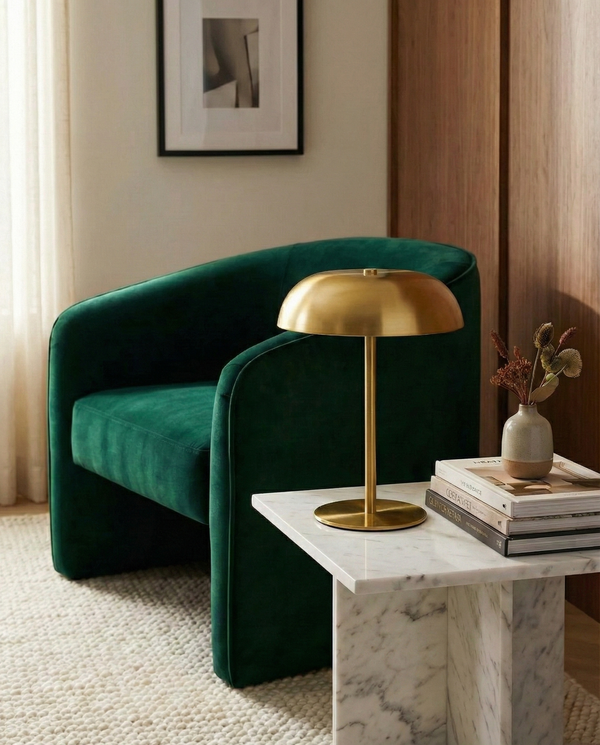

A dusty light fixture isn't just unsightly. It loses up to 30% of its light output when dust builds up on the diffuser or bulb. Worse still: ill-suited cleaning can permanently dull a chrome finish, scratch a blown-glass globe or warp a fabric lampshade.
Want to go further? Discover our best-sellers — 8 designs curated by Lumora.
This guide gives you the right methods, material by material, so your light fixtures stay as beautiful and efficient as on the first day. Each material has its requirements, its allies and its enemies. Take 10 minutes to read this advice — your lamps will thank you for years.
Why regular maintenance matters
Dust is the silent enemy of your light fixtures. It accumulates day after day, so gradually that you don't notice a thing. Then one day you clean a lamp and rediscover its true brightness — it's like changing a bulb.
Three concrete reasons to maintain your light fixtures regularly:
- Light performance — A layer of dust on a diffuser reduces light transmission by 20 to 30%. Cleaning means getting free lumens back.
- Lifespan — Accumulated dust creates thermal insulation that causes LED components to overheat. A clean light fixture lasts longer.
- Aesthetics — Fingerprints on chrome, marks on glass, dust embedded in rattan: all of this shows, especially when the lamp is switched on.
A clean light fixture isn't a luxury. It's the foundation for getting the most out of your lighting investment.
Cleaning a metal light fixture (chrome, brass, steel)
Metal is the most common material in light fixtures. But beware: not all metals are cleaned in the same way.
Chrome and stainless steel
Chrome is tough but prone to micro-scratches. Use a slightly damp microfibre cloth — never an abrasive sponge. For stubborn fingerprints, a drop of diluted white vinegar (1 to 3 parts water) works wonders. Dry immediately to avoid water marks.
Chrome doesn't tolerate chlorine-based products or aggressive detergents. They attack the chrome coating and create irreversible stains.
Brass and copper
Raw brass develops a patina naturally over time. If you like this patina, a simple dusting is enough. If you prefer the shine of new, a mixture of lemon juice and bicarbonate of soda (as a light paste) restores the gleam. Apply, leave for 5 minutes, rinse and dry.
Lacquered brass (found on most modern light fixtures) only needs a soft damp cloth. Never use abrasive products, which would destroy the protective lacquer coating.
Painted or matte metal
Matte finishes and epoxy paints call for even more gentleness. A dry microfibre cloth for daily dusting, slightly damp for more thorough cleaning. No cleaning product, no alcohol, no solvent.


Cleaning a blown-glass or crystal light fixture
Glass is magnificent when it's clean — and disastrous when it isn't. Every mark, every fingerprint shows through by transparency when light passes through the diffuser.
Artisan blown glass
Blown glass has irregular thicknesses and sometimes micro-bubbles (which is part of its charm). Clean it with a mixture of warm water and a drop of neutral washing-up liquid. Use a microfibre cloth, rinse with clean water and dry immediately with a dry cloth.
Never plunge a blown-glass globe into hot water if the lamp has just been switched off. The thermal shock can create invisible cracks that weaken the piece.
Frosted and opaline glass
Frosted glass retains fingerprints more than smooth glass. Wear cotton gloves when handling a frosted globe after cleaning. For stubborn marks, diluted white vinegar is your best ally.
Crystal
Crystal is cleaned like glass but requires meticulous drying to avoid limescale marks. If your water is very hard, rinse with demineralised water (the kind you put in an iron).


Cleaning a fabric or linen lampshade
Fabric lampshades are genuine dust traps. Their texture catches particles and holds onto them. Regular cleaning is essential, but must remain gentle.
Routine dusting
Use a soft-bristled brush (a clothes brush type) or an adhesive roller to remove surface dust. Always work in the direction of the weave. A vacuum cleaner with a soft brush attachment also works, at minimum power.
Localised stains
Dab (never rub) with a damp cloth and a drop of Marseille soap. Rinse by dabbing with a clean damp cloth, then leave to dry naturally — never with a hairdryer, as heat warps the fabric stretched over the frame.
Natural linen and cotton
Natural linen can yellow if exposed to excessive heat. If your linen lampshade has yellowed, cleaning with Marseille soap followed by indirect sunlight can reduce the yellowing. But prevention remains the best strategy: use LED bulbs, which give off almost no heat.
Caring for wood, rattan and bamboo light fixtures
Natural materials bring warmth and character to a light fixture, but they require particular attention because they react to humidity and temperature variations.
Rattan and bamboo
Rattan is naturally porous. Regular dusting with a soft brush (a clean paintbrush does the trick) allows you to reach the gaps in the weave. For deeper cleaning, use a damp cloth with a little black soap. Leave to dry in the open air, away from any direct heat source.
The enemy of rattan is stagnant moisture. If you use a rattan lamp in a damp room (bathroom, conservatory), check regularly that there's no mould in the weave.
Natural or lacquered wood
Natural wood is dusted with a dry cloth and nourished once a year with natural beeswax or wood oil. Lacquered wood only needs a damp cloth — never wax, which would leave a greasy film.


Specific care for rechargeable lamps
Cordless lamps carry a lithium-ion battery that has its own care rules. Well managed, it retains 80% of its capacity after 500 charge cycles. Poorly managed, it can lose half its runtime in a year.
Good charging practices
- Avoid full discharges — Lithium-ion doesn't like going down to 0%. Recharge when the lamp falls below 20%.
- Don't leave permanently plugged in — Constant charging at 100% degrades the battery. Good chargers cut off automatically, but it's better to unplug once charging is complete.
- Temperature — Never recharge a lamp in direct sunlight or near a heat source. The ideal range is 15-25 °C.
- USB-C port — Keep the charging port clean. A wooden toothpick (never a metal one) lets you gently remove accumulated dust.
Long-term storage
If you're storing a rechargeable lamp for several months (end of terrace season, for example), charge it to around 50% before storing it. A battery stored at 0% can suffer irreversible damage. Recharge it briefly every 3 months.
Products and habits to avoid at all costs
Certain cleaning reflexes that work on other surfaces are catastrophic for light fixtures. Here is the blacklist:
- Bleach and chlorine-based products — They attack metallic finishes, yellow plastics and can damage the seals of IP65 lamps.
- Abrasive sponge — Even the soft side of a classic sponge can scratch chrome or polished glass. Microfibre only.
- Neat alcohol on wood — 90° alcohol dissolves varnishes and lacquers. Catastrophic on a varnished wooden lamp base.
- Window cleaner on plastic — Window sprays often contain ammonia, which clouds polycarbonate diffusers.
- Cleaning with the lamp switched on — Always switch off the lamp and let it cool before any cleaning. It's a matter of safety and of preserving the materials.
- Submerging an electrical light fixture — Even IP65 lamps aren't designed to be submerged in water. Waterproofing protects against splashes, not submersion.
Recommended maintenance schedule
There's no need to clean your lamps every day. Here is a realistic and effective schedule:
Weekly
A wipe with a dry microfibre cloth on accessible surfaces. 30 seconds per lamp. Incorporate it into your usual cleaning routine.
Monthly
Damp cleaning of metal and glass surfaces. Dusting of fabric lampshades with a soft brush. Check stems and bases.
Every 3 months
Thorough cleaning: dismantling of removable globes and diffusers, individual cleaning, inspection of cables and plugs for wired models. For rattan and bamboo, black soap cleaning of the gaps.
Once a year
Waxing or oiling of natural wood parts. Check the state of batteries (actual runtime vs original runtime). Inspect the seals of outdoor lamps.
Common problems and solutions
A few frequent situations and how to resolve them:
- The lamp flickers — Check the bulb contact (on replaceable-bulb models). For integrated LEDs, flickering can indicate an incompatible dimmer.
- The finish is chipping — Often the result of overly aggressive cleaning or prolonged exposure to moisture. A touch-up with suitable metal paint can save the situation.
- The runtime has decreased — After 300-500 charge cycles, the battery naturally loses capacity. Check your charging habits (see previous section).
- White marks on the chrome — These are limescale deposits. Diluted white vinegar removes them easily.
- The rattan has gone mouldy — Clean with a 50/50 mixture of white vinegar and water, and leave to dry in the sun. If the mould is deep, an antifungal wood treatment may be necessary.
Our easiest light fixtures to maintain
Certain materials and designs considerably simplify daily upkeep. Here are three Lumora models designed to stay beautiful without effort.

Sevora — Amber blown glass pendant
Amber blown glass that captures the warmth of a sunset. Mid-Century Modern in spirit, it comes in three shapes (cylinder, oval, sphere) and as a set of 3 for a table or island. E27 fitting.
- Pendant light
- Amber blown glass
- E27 fitting
- 3 shapes or set of 3

Verora — Fluted glass and rattan wall light
Our best-selling wall light: finely fluted clear glass on a warm frame, designed like a piece of wall jewellery that creates an intimate atmosphere as night falls.
- Wall light
- Fluted glass
- Rattan
- Grey or gold finish

Temora — Rice paper lamp, 60 cm
The Japanese art of rice paper in a generous 60 cm silhouette: a soft, glare-free light that dresses a room. Standard E27 fitting, compatible with any bulb.
- Table lamp
- Rice paper
- 60 cm
- E27 fitting
Frequently asked questions about caring for light fixtures
Can I use a window cleaner on my light fixtures?
Only on smooth (non-frosted) glass. Window cleaners often contain ammonia, which can cloud plastics and polycarbonates and damage metallic finishes. On glass, they work well, but soapy water remains safer.
How often should a light fixture be cleaned?
Weekly dusting with a dry cloth is enough for everyday upkeep. A monthly damp clean and a quarterly deep clean (with removable parts dismantled) make for an ideal rhythm. Kitchen lamps need more frequent cleaning because of grease splashes.
How do you clean a lamp without dismantling it?
Use an electrostatic duster for quick dusting. For damp cleaning without dismantling, spray the product onto the cloth (never directly onto the lamp) and wipe gently. Protect the electrical parts by placing a dry cloth over the connectors.
My rechargeable lamp no longer holds a charge, what should I do?
After 2 to 3 years of daily use (300-500 cycles), a runtime loss of 20 to 30% is normal. First check your charging habits (avoid discharges to 0%). If the problem persists, contact customer service — most quality batteries are replaceable.
Beautiful, long-lasting light fixtures
Caring for a light fixture is neither complicated nor time-consuming. A few minutes a week, the right actions and the right products — that's all it takes for your lamps to retain their shine and performance for years.
The golden rule: when in doubt, always choose the gentlest method. A damp microfibre cloth solves 90% of situations. Save specific products for cases that really need them.
See the entire Lumora collection →
Free delivery in mainland France. Free returns within 30 days. Secure payment.
The Lumora team's view
Our light fixtures are designed to make maintenance easy. Built-in LEDs (no bulb to change), smooth surfaces, treated materials. For minimal care with maximum results, the Noara in polished chrome is unbeatable — one wipe and it shines like the first day.


